

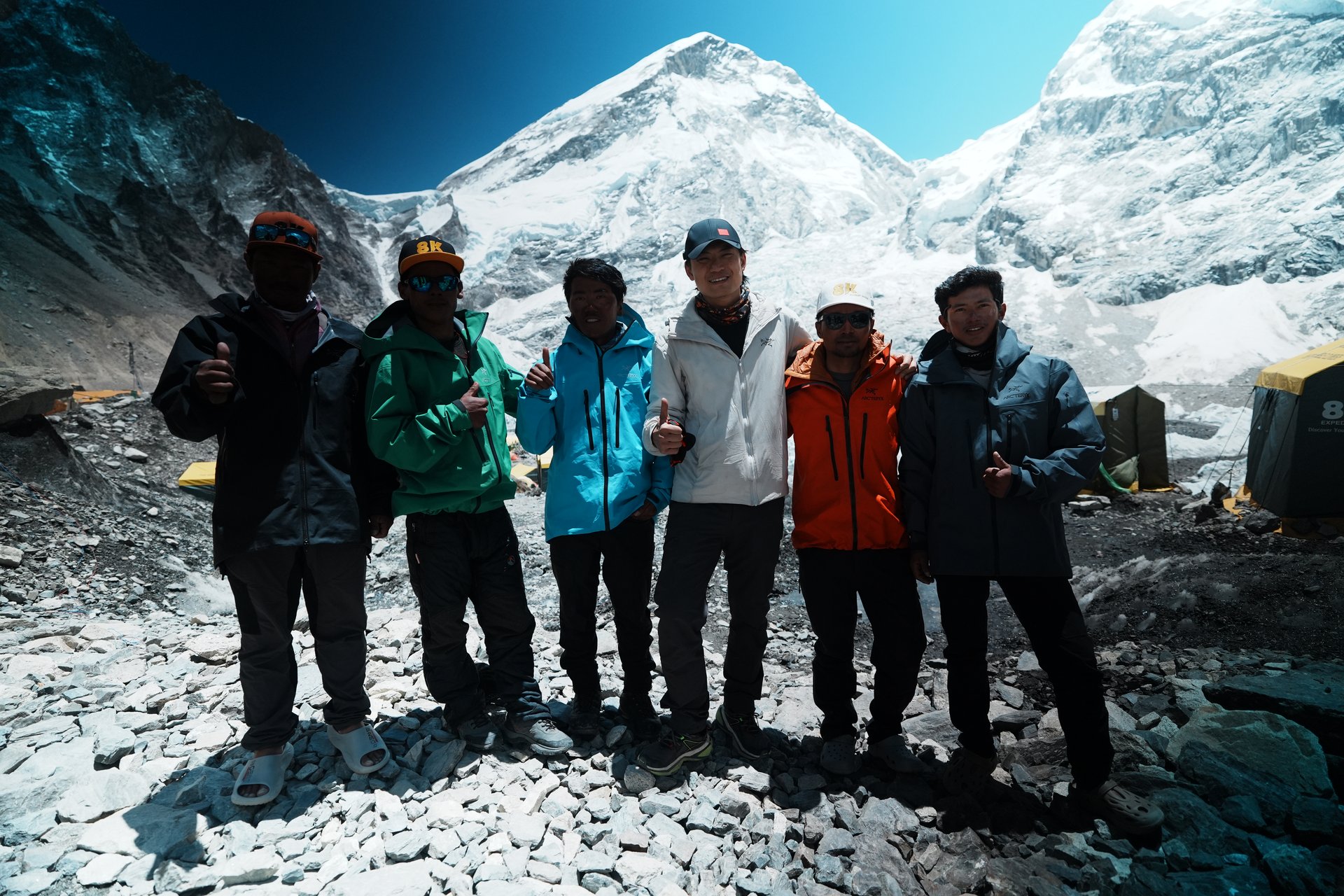
World First Bedrock Ice Core from the Summit of Everest
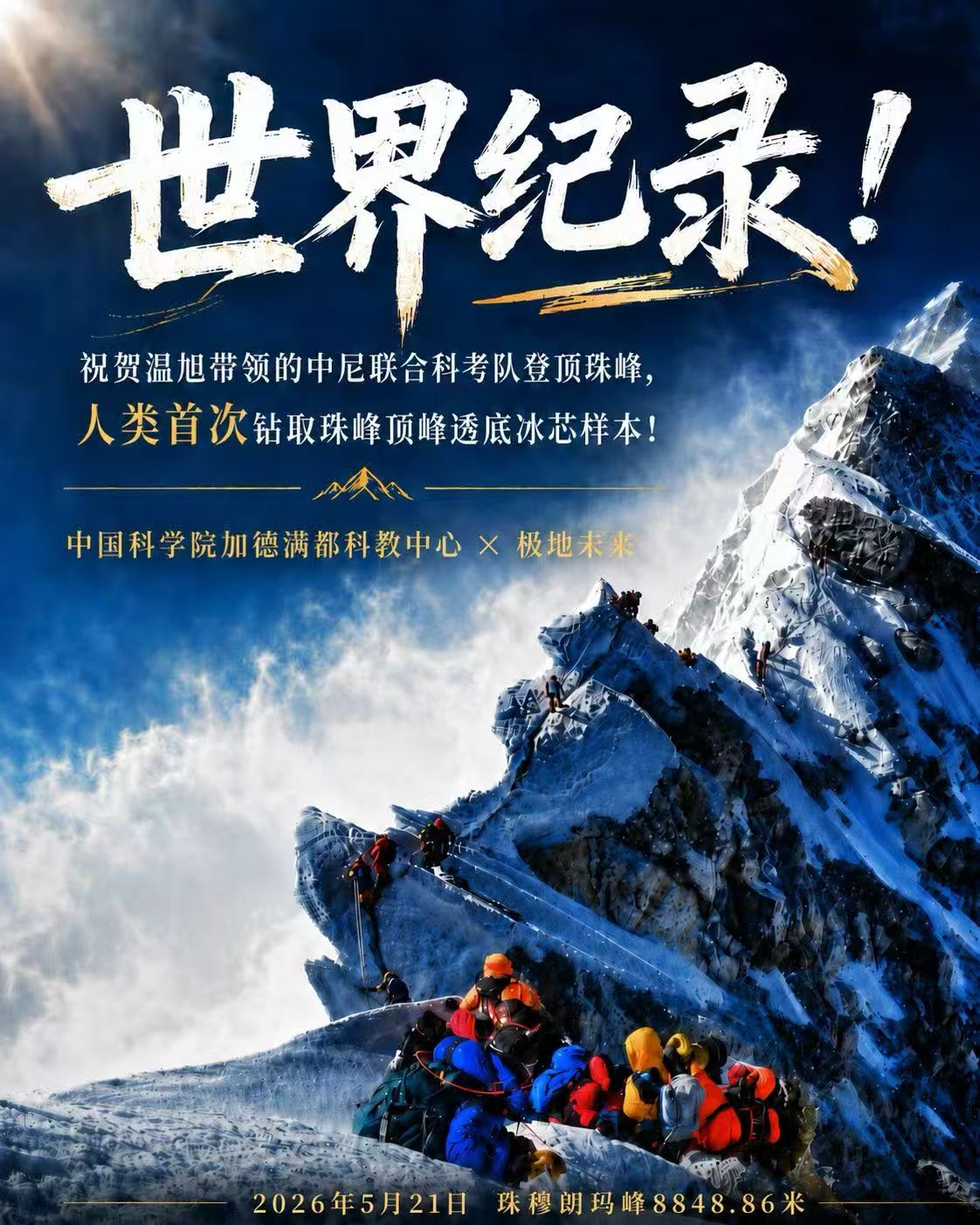
The China-Nepal Joint Scientific Expedition Team “Everest Ice Core”, led by expedition leader Wen Xu, summited the highest point on Earth and completed the first bedrock-to-surface ice core ever drilled at the summit of Mount Everest.
The Project
Jointly initiated by CAS Kathmandu Center for Research and Education × Polar Hub
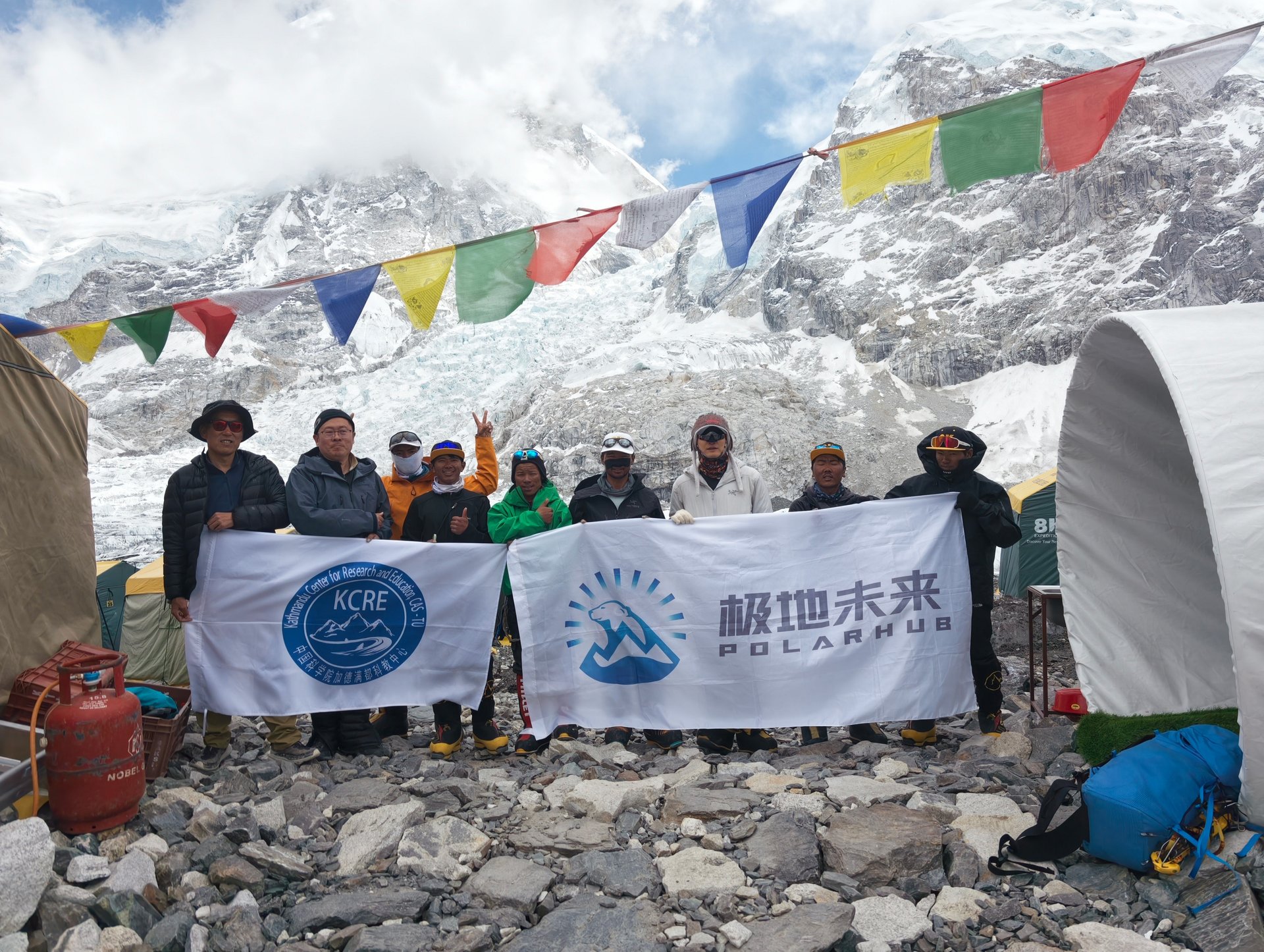
The “Everest Ice Core” project was jointly initiated by the Kathmandu Center for Research and Education, Chinese Academy of Sciences (CAS-DC) and Tianjin Institute for Extreme Climate Change Response (Polar Hub). In May 2026, the China-Nepal joint expedition approached Mount Everest from the south (Nepal) side to drill ice cores and collect elevation-gradient scientific samples.
- Expedition Leader: Wen Xu (Founder of Polar Hub)
- Chief Scientist: Xu Baiqing (Deputy Director and Professor, Institute of Tibetan Plateau Research, CAS)
- Team: Researchers from China and Nepal, senior mountain guides and professional logistics support staff
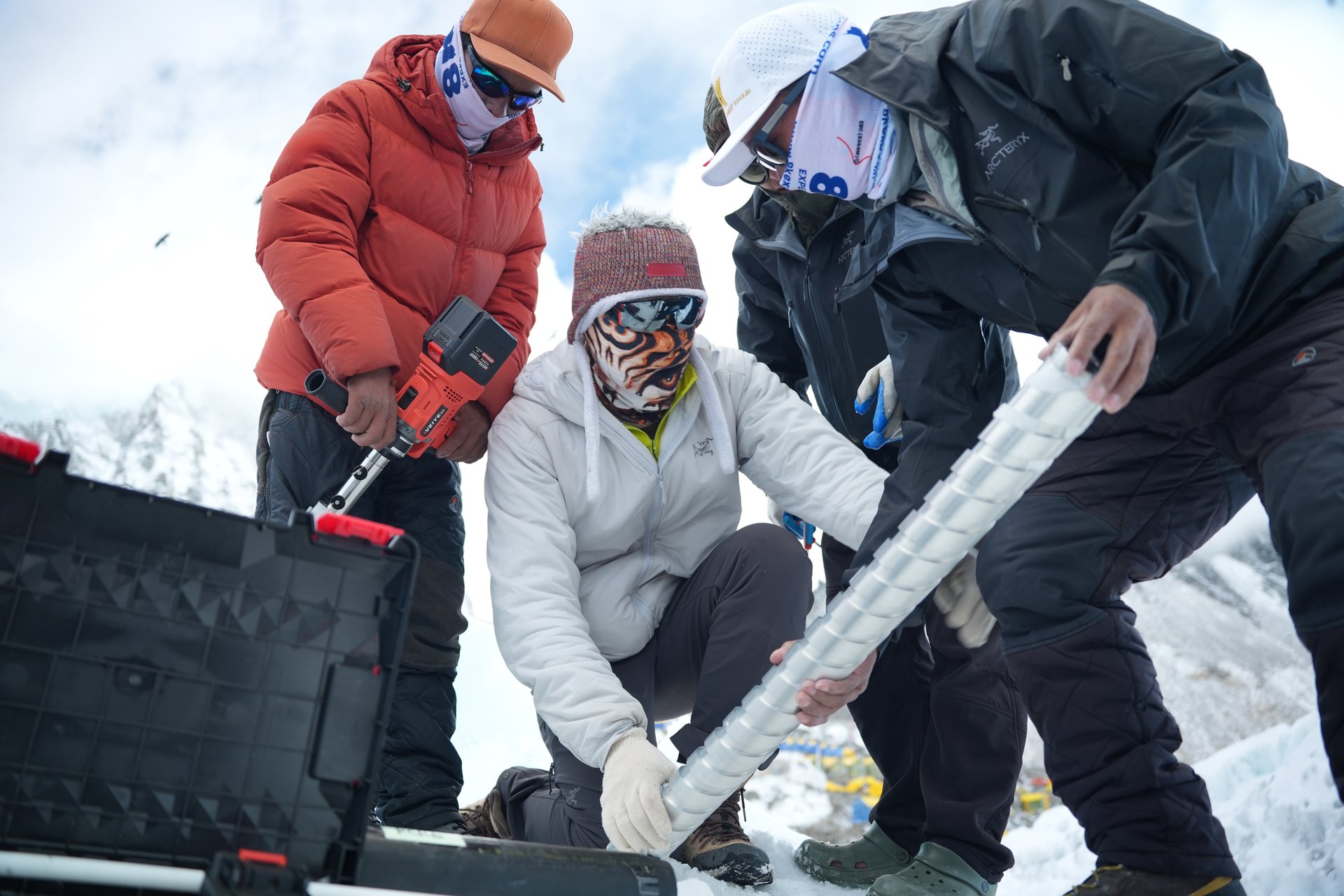
Braving extreme cold, hypoxia, high winds and rapidly changing mountain weather, the team summited at 7:30 local time on May 21 and worked continuously for about three hours on the summit, drilling the first complete bedrock ice core ever obtained at the top of Mount Everest. On the descent, the team continued collecting ice and snow cores at different elevations, building a complete sampling system from 6,000 m up to the summit.
Forty Days: From Base Camp to the Top of the World
April — May 2026 · South Side of Mount Everest
- Apr 29The “Icefall Doctors” completed the route through the Khumbu Icefall
- May 6The team moved into Everest South Base Camp; the joint expedition officially began
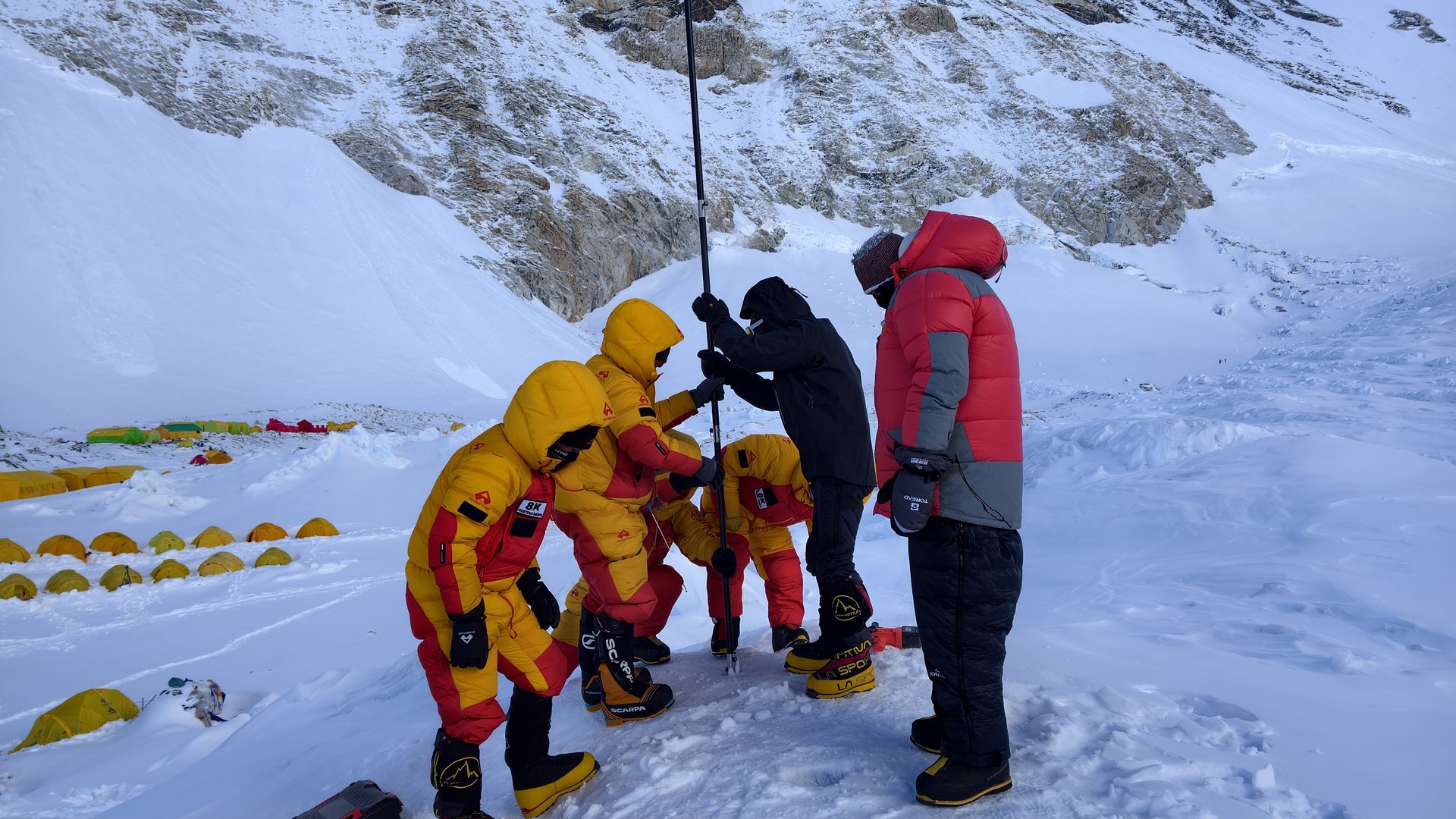
- May 8-9Trial ice-core drilling at 5,800 m to test equipment under extreme conditions
- May 10Acclimatization trek through the Khumbu Icefall; final calibration of all instruments
- May 11-14Drilling rehearsal near Camp 2 at ~6,500 m; an 8-metre ice core successfully drilled
- May 15-17Deteriorating weather forced a retreat to Base Camp; the team returned to Camp 2 on May 18
- May 20Arrived at Camp 4; all pre-summit preparations completed
- May 21Summited at 7:30 local time and worked about three hours on top, completing the first-ever bedrock ice core drilled at the Everest summit; ice and snow cores collected along the descent at graded elevations
The Science Frozen Inside the Ice
A summit ice core is a chronicle sealed in ice
A Chronicle Sealed in Ice
The bedrock ice core holds a continuous, complete time series preserving traces of climatic and environmental change in the upper atmosphere over the past century.
Monsoon–Westerlies Evidence Chain
Everest’s south and north slopes lie on the windward and leeward sides of the monsoon. Vertical gradient sampling from 6,000 m to the summit helps reconstruct monsoon–westerlies interactions.
Pollutant Transport Pathways
The cores can trace how atmospheric pollutants are transported to the high Himalaya and the Tibetan Plateau.
Life in Extreme Environments
Testing whether special microorganisms exist under high UV, intense radiation and extreme cold.
“From obtaining the ice core samples, to analyzing data, to producing scientific results, it is a long process. These precious samples will provide unique and key evidence for revealing climate and environmental change in the highest region of the Earth.”— Xu Baiqing, Chief Scientist; Deputy Director, Institute of Tibetan Plateau Research, CAS
Science at the Highest Point on Earth
On-site footage of the summit science operations
 03:58
Tap to play · streams on this site
If playback stutters, watch it on Weibo ↗
Video: Science at the Highest Point on Earth · 3 min 58 s · Source: UN News Weibo video channel, published June 5, 2026 (World Environment Day)
Expedition Gallery
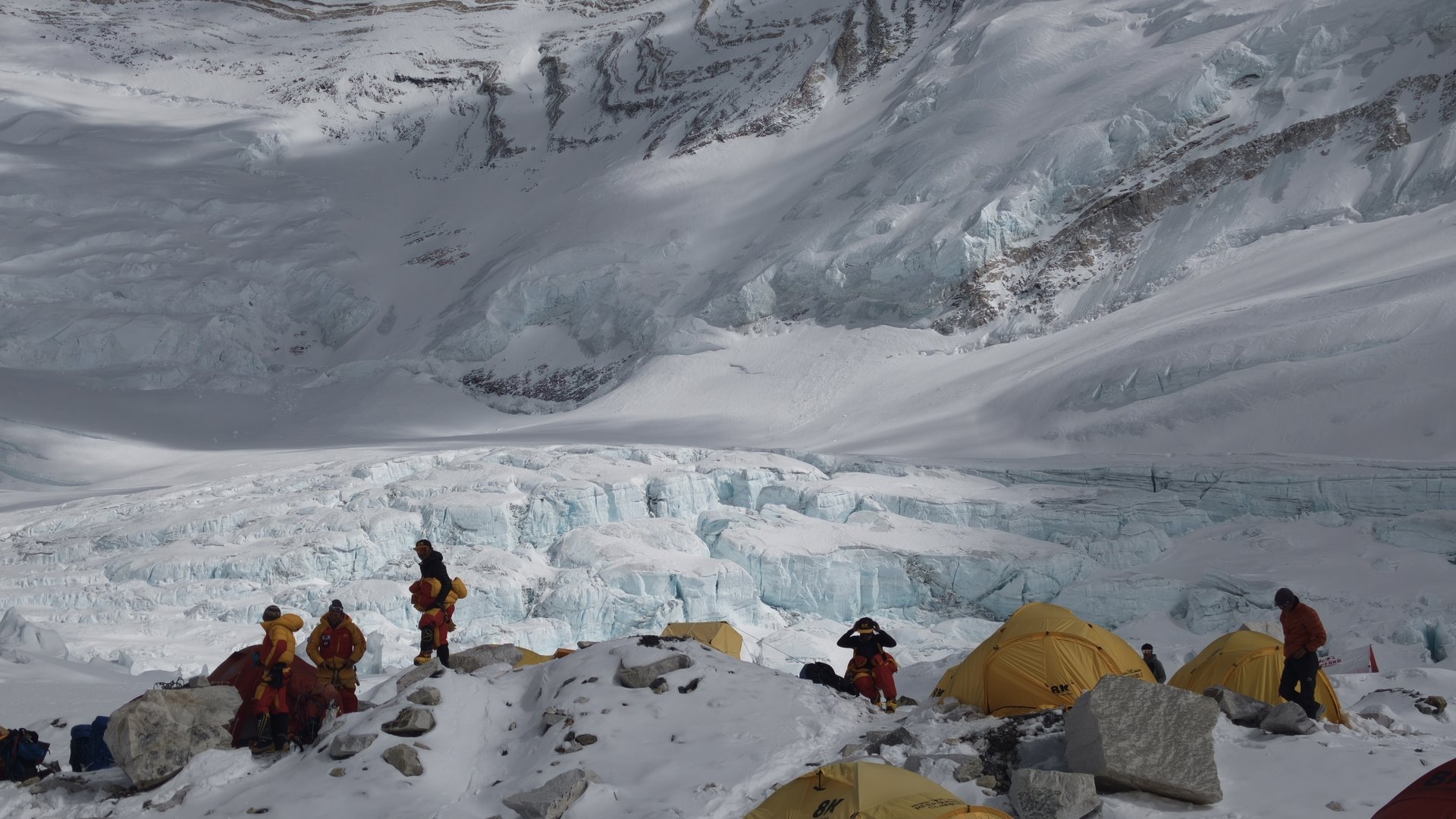
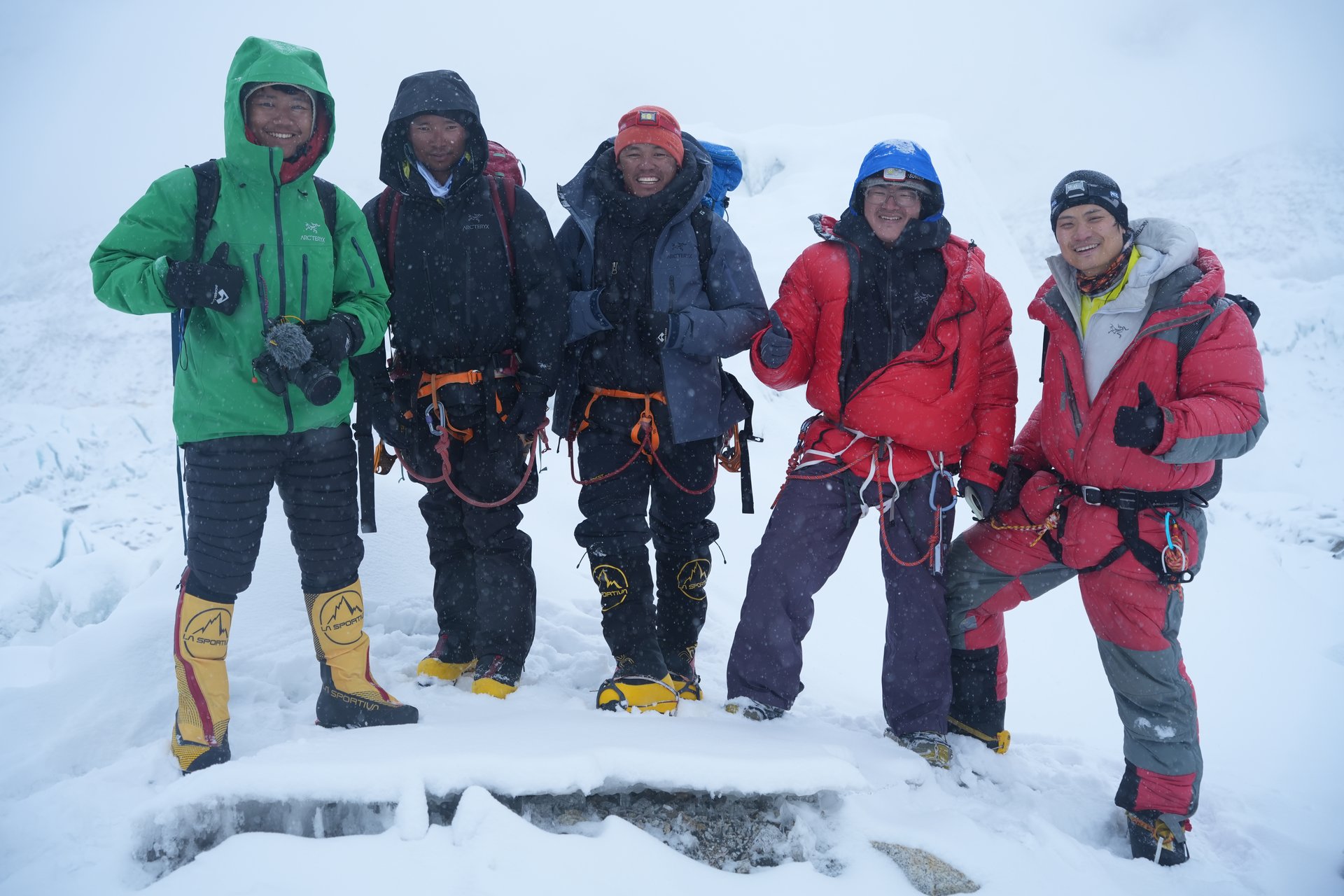
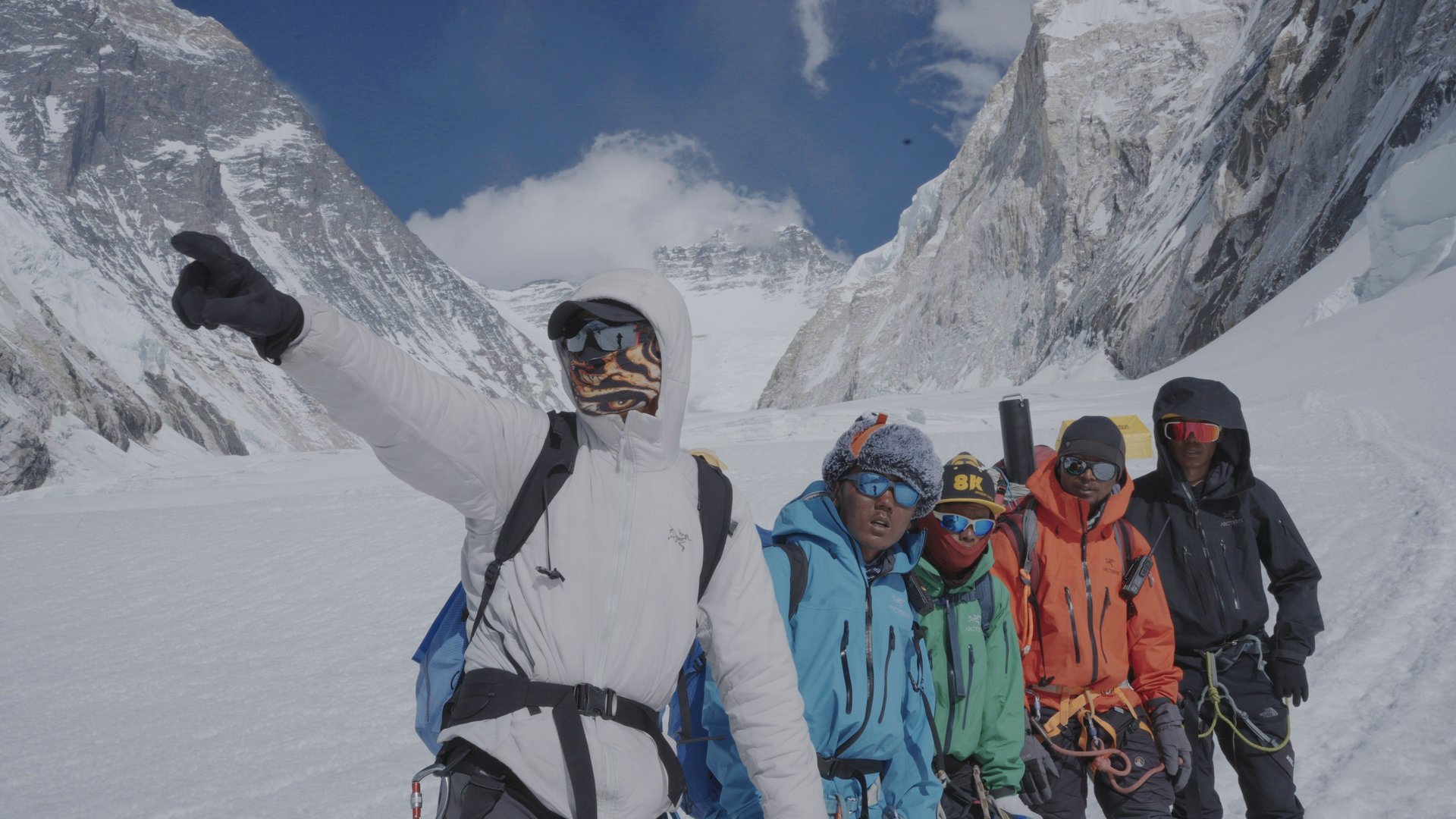
From Camp 1 to the summit · Photos: Tianjin Institute for Extreme Climate Change Response
Media Coverage
The world record drew wide attention at home and abroad
CAS Kathmandu Center for Research and Education × Polar Hub